Choosing a Heavy-Duty Battery Charger
Heavy-duty charging requirements vary between a single workshop vehicle, a standby fleet and a high-volume battery service operation. Choose the charger around the battery system and daily workload, rather than selecting on output current alone.
Match the System Voltage and Battery Chemistry
Start with the nominal voltage of the battery or battery bank. This collection includes chargers for 12V and 24V systems, dual-voltage 12/24V units and specialised 36V, 48V and multi-battery gang-charging applications.
Next, confirm the exact battery chemistry on the product page. Compatibility varies by model: selected chargers support combinations of flooded lead-acid, AGM, gel, calcium and LiFePO4 batteries, while other units have a more specific charging purpose. Never assume that one charging profile suits every battery.
Select the Right Charge Current and Capacity Range
Match output current to the battery manufacturer’s recommended charging rate and the capacity range stated for the charger. A higher current is not automatically the correct choice. Consider how quickly batteries need to return to service, how often the charger will operate and whether it must support one battery or several at once.
Choose the Charger for the Job
Durst’s heavy-duty range covers several workshop and industrial workflows:
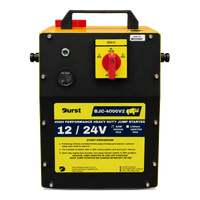
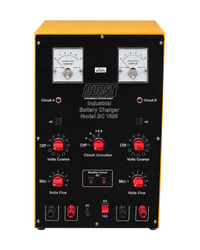
- Transformer workshop and trolley chargers for robust high-current charging, with engine-start assistance on selected models.
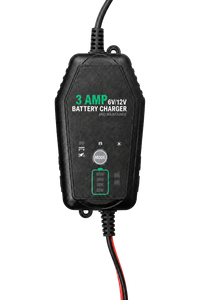
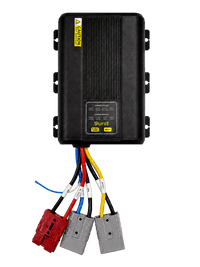
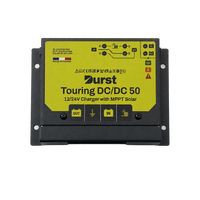
- Fully automatic switchmode chargers for controlled multi-stage charging, with power-supply operation on selected models.
- Dual-output, wall-mounted, multi-channel and gang-charging systems for fleets, battery rooms and higher-volume servicing.
- Waterproof chargers for installations where the charger may face more demanding environmental conditions.
Check each model’s voltage, continuous output, channels, battery compatibility, duty type, mounting arrangement and included leads before ordering.
Plan the Installation
Confirm the AC input supply, cable and connector arrangement, ventilation, mounting space and circuit protection required by the product instructions. Waterproof does not mean submersible, and the stated protection rating and installation limits must be checked for the exact model.
Compare the individual specifications or contact Durst if you need help matching a charger to a workshop, fleet or industrial application.