

Picture this. The car's packed, the boards are on the roof and the kids have been counting down for weeks. The Christmas school holidays are the biggest caravan season of the year.
So before you hitch up, give your battery setup the same attention you give your tyres and tow hitch. It takes half an hour. Caravan fires aren't common, but they're not rare either: from all causes, Queensland recorded 341 caravan and camper fires in five years, and WA 119 in five years. For why summer is hard on batteries, see lithium battery safety in summer.
Before you leave: the driveway check
- Look at the battery. Any swelling, cracks, leaks, scorch marks or a strange smell? Don't use it. Have it checked first.
- Check the terminals. Tight and clean, with no corrosion or discoloured lugs. A loose terminal can get very hot under load.
- Check the cables. Secured, and unable to rub on sharp edges. Corrugations find every weak spot.
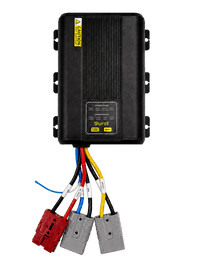
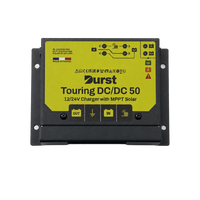
- Check your chargers. Your mains charger, DC-DC charger and solar controller should all be set to your battery type.
- Clear the battery area. No bags, bedding, jerry cans, gas bottles or aerosols around the battery, and nothing blocking the vents.
- Find the isolator. Show everyone old enough how to use it.
- Test your smoke alarm and check your fire blanket and extinguisher are in date and easy to reach.
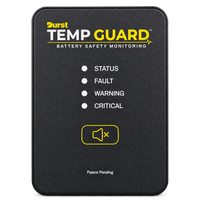
- Test Temp Guard. Fit three fresh AAA alkaline batteries if they're due (not lithium or rechargeable; Procell Intense is recommended), check the green STATUS pulse and run the alarm test from your manual.
On the road
Your house battery is often charging from the vehicle while you drive, out of sight and out of mind. At every fuel or stretch stop, take ten seconds to notice anything unusual: a hot or burning smell, a hissing sound, or smoke from a compartment. If something doesn't seem right, pull over somewhere safe, switch off the engine and get everyone out and away.
At camp
- Park so you can get out of the van easily, and keep the door and walkway clear.
- Give the battery compartment airflow on hot days. Don't stack chairs or bags against the vents.
- Charge e-bikes, scooters, drones and power banks while you're awake and nearby, on a hard surface, with the charger that came with them. Not overnight under the bed.
- If a battery seems off, don't leave it charging while you're out for the day.
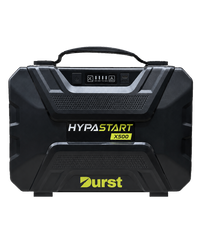
- Running a portable battery box at camp? See fitting Temp Guard to a battery box.
At night: the part that matters most
Night is when most of us stop watching. The kids are asleep and the batteries are tucked under the bed, often still charging. So agree a simple family plan before the first night: if any alarm goes off, everyone gets up and out and meets at a set spot, like the car. Do a quick walk-through on day one. Our guide on what to do if your battery alarm goes off has the steps.
An early warning that keeps watch while you sleep
Most quality lithium batteries have a BMS, and your charger has its own protection. Most nights they do their job. But protection can fail. Temp Guard is an independent early warning: its sensor sits on the battery terminal, it runs on its own AAA batteries, and if it picks up abnormal heat or a fast rise it sounds a loud alarm. The Remote Alarm model adds a 98 dB alarm you can mount near the bed.
A gift for the caravanner in your life
Stuck for a present? Temp Guard is designed by Durst Industries Australia, works on any battery type and comes with a 3-year warranty. It's the kind of gift that says you'd like them home safe.
Frequently asked questions
What should I check on my caravan battery before a trip?
Look for swelling, damage or smells, check terminals and cables, confirm charger settings, clear the battery area, find the isolator and test your alarms.
Is it safe to charge e-bikes in the caravan overnight?
It's better to charge them while you're awake and nearby, on a hard surface, with the charger that came with them.
What batteries does Temp Guard use?
Three AAA alkaline batteries. Lithium and rechargeable AAAs aren't recommended; Procell Intense is the recommended type.
More on Temp Guard
- How Temp Guard works and who it's for
- Temp Guard alarm levels explained: WARNING, CRITICAL and RAPID EVENT
- What to do if your battery alarm goes off
- Still watching when protection fails: why an independent battery monitor matters
- Lithium battery safety in summer: keeping your caravan and 4WD cool
- Fitting your own lithium battery in a battery box? Add Temp Guard
- Lithium battery protection: why batteries still catch fire (already live)
Meet Temp Guard. See the Temp Guard range.
Designed by Durst Industries Australia. When protection fails, Temp Guard is still watching.
Last updated 6 November 2026
