

Picture this. You've bought a battery box, dropped your own lithium battery in, and it now goes everywhere: in the back of the 4WD on the drive up, next to the fridge at camp, under the van awning at night. It's one of the handiest setups in touring. It also means your battery rides in a closed box, often in a hot car and usually out of sight.
Why so many people build their own battery box
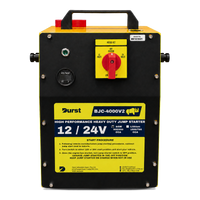
A portable box lets you choose your own battery and move power to where you need it. Durst's battery boxes include:
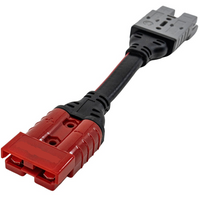
- The Durst Portable 12V Battery Box, for deep-cycle batteries up to 120Ah, with 2 x 50A Anderson-style outlets, a 12V socket, dual USB, insulated bolt terminals and an LED voltmeter.
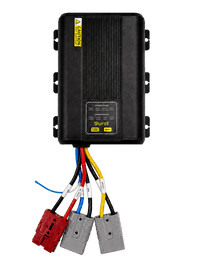
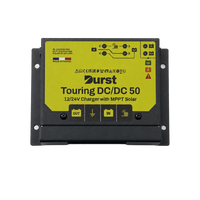
- The 20 Amp Portable Dual Battery Box Power Station Kit and the 40 Amp Portable Dual Battery Box Powerstation Kit, both with an integrated DC-DC charger that takes alternator and solar input. All Durst DC-DC chargers suit smart alternators.
What the BMS does, and what it can't tell you
Most quality lithium batteries have a BMS, and most of the time it quietly does its job. But protection can fail: a cell fails, the charger keeps charging and the BMS doesn't trip. In a closed box in the back of the car, you might not know anything is wrong until it's too late.
How Temp Guard works in a battery box
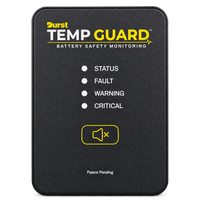
Temp Guard has its own sensor on the battery and runs on its own three AAA batteries, so it keeps watching even if the battery or its BMS shuts down. It checks how hot the battery is, how fast it's heating and how much hotter it is than the air around it, and sounds a loud alarm at the first sign of abnormal heat. The sensor is electrically isolated and only measures temperature, so it suits lithium, AGM or any other battery you put in the box. See how Temp Guard works.
Two ways to fit it
Durst's advice is that both of these work. Pick the one that suits your box and where it lives.
Option 1: inside the box
Durst says fitting Temp Guard inside the box is fine for most setups. On a summer's day in direct sun it can get hot inside a battery box. In Durst's experience it should generally stay under 55 °C, but keep the box shaded and ventilated where you can. 55 °C is also Temp Guard's WARNING point, so a box left in full sun on a very hot day can set off a WARNING. That's not a false alarm. A lithium battery really shouldn't sit at that temperature if it can be avoided, so treat the WARNING as your cue to move the box somewhere cooler and shaded. Ease off charging too, and once it has cooled, check for a loose terminal.
Temp Guard is built to work in hot environments. That's its job. Its recommended operating range goes up to +55 °C, the same as its WARNING point. That's a guide for real-world use, not a point where it shuts off. Like most electronics, long periods at high heat will shorten its life. In Durst's experience, real battery boxes reach those temperatures less often than people think. And if a box does reach 55 °C, the WARNING is doing exactly what it should: telling you to move the battery somewhere cooler.
So inside the box is fine for most setups. If your box often sits in full sun or could get wet (the main unit isn't waterproof), Option 2 is worth considering.
Option 2: outside the box
Mount the Temp Guard cradle on a free outside panel of the battery box, slide Temp Guard into it, and feed the sensor lead through to the battery's negative terminal. This keeps the main unit, lights and alarm easy to see and hear, and out of the heat inside the box.
Durst battery boxes already have holes in the side, for mounting straps and the like, and the sensor lead can go through one of these. On other boxes, drilling a small hole in the box panel is OK. Never drill into the battery or any component inside the box, and fit a sealed grommet so the lead is protected and water stays out.
The sensor lead is a calibrated 2 m length, so don't cut, shorten or join it. Coil any spare neatly. The sensor ring lug sits on top of the cable lug on the negative terminal. The mounting cradle kit is available separately if you want a second cradle.
Test it, then get on with your trip
Follow the Quick Start Guide, then test Temp Guard after fitting it, every month and before each trip. If the box lives in the tray or boot where you might not hear it, the 98 dB remote alarm on its 5 m lead can bring the alarm into the cab.
If the alarm goes off
Switch off charging if it's safe, get everyone clear, and call emergency services on 000 if you see smoke or fire. Read what to do if your battery alarm goes off.
Frequently asked questions
Can I fit Temp Guard to a portable battery box?
Yes. Its sensor fits to the battery's negative terminal, and Durst says it can go inside the box or in its cradle on the outside of the box.
Should Temp Guard go inside or outside the battery box?
Both work. Inside the box is fine for most setups, and in Durst's experience real boxes get hot less often than people think. If the box often sits in full sun or could get wet, the outside mount, in the cradle on a free panel, is an option that also keeps the alarm easy to hear.
Will a hot day set off Temp Guard in a battery box?
It can. 55 °C is the WARNING point, so a box in full sun on a very hot day can trigger a WARNING. That's a useful warning sign, not a false alarm: a lithium battery shouldn't sit that hot if it can be avoided, so move the box somewhere cooler and shaded.
Do I need to drill the box for the sensor lead?
Usually not. Durst battery boxes already have side holes, for mounting straps and the like, that the lead can use. Otherwise a small hole in the box panel is OK, as long as you never drill into the battery or any component, and you fit a sealed grommet to keep water out.
Doesn't my lithium battery's BMS already protect it?
Most quality lithium batteries have a BMS, and it usually does its job. Temp Guard adds an independent early warning in case protection fails.
More on Temp Guard
- How Temp Guard works and who it's for
- Temp Guard alarm levels explained: WARNING, CRITICAL and RAPID EVENT
- What to do if your battery alarm goes off
- Still watching when protection fails: why an independent battery monitor matters
- Lithium battery safety in summer: keeping your caravan and 4WD cool
- Protect your family this Christmas holidays: a caravan battery safety checklist
- Lithium battery protection: why batteries still catch fire (already live)
Meet Temp Guard. See the Temp Guard range.
Designed by Durst Industries Australia. When protection fails, Temp Guard is still watching.
Last updated 5 November 2026
